The Art and Life of Rudolph Schirmer

An Artist and a Gentleman, Rudolph Schirmer left a rich legacy of creative works - poetry, fiction, non-fiction, music - and me, his only child. This chronicle is a collaborative celebration of his life and imagination.
Liane Schirmer, 2009

Thursday, August 13, 2009

Tuxedo Park


A favorite summer destination for young Rudolph. Following is an excellent article on this idyllic location, home of the "tuxedo".

http://en.wikipedia.org/wiki/Tuxedo_Park,_New_York

Friday, March 13, 2009

Los Angeles - Part 3 - "The Music Center"

Los Angeles Music Center, Dorothy Chandler Pavillion.

Today, in 2009, Los Angeles is a world-class city.  For almost 100 years, it has been the capital of the film industry (at least in the Western world).  As of the millenium, L.A. is at the forefront of new media, creating novel ways of creating and disseminating art, music, video and live performance. 

 But there was a time when the rest of the country considered Angelenos to be second-class cultural citizens.   Transplants from New York kept missing the idea of Broadway, where major theaters clustered around the fabled street.  They pined after Carnegie Hall, Lincoln Center and the Metropolitan Opera.   To be sure, we had the Hollywood Bowl, and the Shrine Auditorium and UCLA's Royce Hall, but the far flung nature of our performance venues, nestled, as they were in a series of suburbs, contributed to the prevailing notion that Los Angeles had no center, and therefore, no concrete evidence of a centralized arts scene. 

It wasn't merely an issue of East vs. West. San Franciscans had long lorded over us Angels to the south, rubbing the excellence of their beloved opera in our noses. Pasadena, our genteel neighbor, reeked of refinement and culture and had several notable venues in which to enjoy it, such as the Pasadena Civic Auditorium and the Ambassador.   No wonder, as Pasadena had been populated by transplants from the Midwest and the East.  We, her slightly flashy, slightly trashy cousins, were forced into seedy second place.  But not for long.

Enter Dorothy Buffum Chandler, wife of L.A. Times magnate Norman Chandler, whose passion and determination to create a "West Coast" center for the performing arts downtown was not only welcome, but legendary in its largesse.  However, she wasn't the only one who dreamed of building a monument to the performing arts. 

Rudolph, an adopted Angeleno, envisioned that very thing, elaborating his novel concept in a memorandum to the Board of Directors.  Interestingly enough, this was most likely written in the mid-fifties, when he was sent to Los Angeles to oversee Schirmer retail operations in the greater metropolitan area.  Surely, while he there, he would have inserted himself into the classical music scene, and was no doubt privy to discussions on the future of the arts in L.A. Who knows, perhaps at a dinner party one evening, Buff sat next to the handsome heir to the publishing firm and listened to his vision for our fair city.  I would love to imagine that very thing.

Following is an excerpt from MEMORANDUM TO BOARD OF DIRECTORS RE THE LOS ANGELES STORES  [G. SCHIRMER, INC.] by Rudolph Schirmer, circa mid-1950's

"...In the time I have been in Los Angeles I have perforce given considerable thought to our branch stores in this area. I have been concerned not only with improvements  that might be made within the framework of the present operations, but also, and more importantly, with the various ways by which the nature and scope of this operation might be transformed so as to yield a firm financial return while at the same time promoting our name and product together with the general cause of music in the West. 

Just as Los Angeles itself has been likened to a group of towns in search of a city, so might the musical world within it be compared to a band of performers in search of a conductor - or, to elaborate the comparison, to an orchestra of soloists locked in separate and non-communicating chambers.   Only in a few instances has this local "autonomia" been overcome and a landmark provided which captured the allegiance of the joint community and the recognition of the outside world. 

I refer of course to the Hollywood Bowl, Disneyland and the Famers Market.  If nothing else, these institutions have proven that it is possible in Los Angeles to create focal centers.  We may therefore explore with some confidence the possible creation of a general music center which could be subsequently - or simultaneously - allied with a cultural development on the order of Lincold Center in New York. If we are thinking in terms of ultimate solutions and not of temporary remedies this is the direction our thinking will have to take.

...Construction of an all-inclusive music center, either one large building or a complex of small buildings around a court, housing salesrooms for the leading companies in all music fields and an all-purpose auditorium, to be known tentatively as "SCHIRMER'S WEST COAST MUSIC CENTER."  A leasing corporation would be formed.  Schirmer's would have the master lease and lease out the various concessions.  At the end of ten years, the building would belong to Schirmer's, with a small percentage of the stock reserved for the building company....

...To the question, should we withdraw from Los Angeles altogether, my answer is emphatically no.  No one will contest that this is rapidly becoming the second largest American city and within 10 ears it is bound to be the second in importance as well.  The population is currently augmenting at the rate of 20,000 a month.  I happen to know that concrete forces are already at work to provide Los Angeles with musical facilities commensurate with its size.  The Universities, the Hollywood Bowl Association, the Philharmonic and the Los Angeles Conservatory (whose board I have been asked to join) are responding to the inarticulate but quite perceptible pressures of the whole Southern California populace."

*Footnote:  It will be noted that Los Angeles in the 40's and 50's actually did boast world class musicians, many of whom fled Europe during the war and contributed classic scores to films. Indeed, Schoenberg, Heifitz and many others lent their talents to our educational institutions, no doubt influencing hundreds of young composers, vocalists and instrumentalists.  

As a matter of fact, Los Angeles, beginning with the latter part of the 19th century, had an incredible system of music education in the schools, where every classroom was equipped with a record player and a supply of musical classics.  Indeed, there were music schools in every neighborhood, and our radio stations, unlike the narrow theme-casting of today, played an ecclectic mix of popular standards and classical music, ensuring that Angelenos from all walks of life were incredibly well-versed in the classical music repertoire.

Today, arts programs have been virtually eliminated from the public school system and musical training is available only to those with the economic means to afford private lessons. We really are in danger of becoming culturally - and especially musically - illiterate, not to mention economically marginalized.  It is both astonishing and amazing that we as a city have allowed this misfortune to occur.  And how insulting to the very real, and very rich musical heritage that was present for so long in our fair city.  

Perhaps it is not too late to reclaim our legacy and honor those many gifted musical artists and teachers that have at one time lived, worked and taught in Los Angeles.  Perhaps Rudolph's vision of a real "music center", a vibrant city that teaches, listens to and creates beautiful music - is yet to be built.  Perhaps it is up to those of us who value such things, to see to it that it comes to pass.

I'm sure Buff would agree!
  
For more information I highly recommend:


Wednesday, March 11, 2009

Iris Flores - The Second Mrs. Schirmer


EXT. NEW YORK CITY - PLAZA HOTEL - 1950 - DAY
A stunning young Latin, IRIS FLORES, steps out of a taxi, hatbox in hand. Peering out through her black lace veil, she glances upwards at the towering city. It's a long way from the Coast. Fresh off of a string of Hollywood films, this rising star is bent on conquering a new galaxy, Gotham City.
RALPH, the driver, waves at her impatiently.
RALPH
Hey, Sweetheart, ain't you forgettin' somethin'?
Iris turns back to him, oblivious to his request.
IRIS
They're so ...tall...aren't they?
DRIVER
(aside) Fresh off the boat. I can spot 'em a mile away.
IRIS
Tell me, Driver, do you ever get tired of looking at them?
DRIVER
Tourists?
IRIS
No, silly. The buildings. I could spend all day just wandering around, staring up at them.
DRIVER
Not me, Sister. That'd give me a headache.
Iris turns to him, suddenly, and with a charmingly earnest smile, bats her eyelashes.
IRIS
How unfortunate!
DRIVER
Say, wait a minute! Ain't you the girl who was in "Song of the Sierra" with Fernando Ramos?
IRIS
You mean "was". On both accounts. Tragic really.
DRIVER
Sorry, kid. Yeah, them's the breaks. I read all about it in Screen Gems Magazine. (he waves his copy in the air)
IRIS
All that's behind me now. I'm going to start a new life. Right here, in Manhattan.
DRIVER
(a bit sarcastically) That's the spirit, Sister!
IRIS
(sweetly) You don't believe me.
DRIVER
Me? ...I didn't say nothin'...but in my line, I sees a hundred of youze gals every day, gettin' off of a bus, or a train, or the subway, coming here, to Manhattan, to meet Prince Charming and take the world by storm. You gotta admit, after a while, it gets a little stale.
Silence.
DRIVER
Am I right?
IRIS
I have absolutely no desire to take over the world. Who would want a job as complicated as all that? And as for Prince Charmings, I've had quite enough so-called Princes in my day, thank you. I'll stick to my career. (aside) At least that hasn't cheated on me....(dramatic pause) yet. Now, how much do I owe you?
DRIVER
(waving her away) Nah. This one's on the house.
IRIS
Oh, that's so sweet of you, but I couldn't....
Iris searches the contents of her purse.
DRIVER
What's your name?
IRIS
Iris, with an "I".
DRIVER
"Iris with an I". Go buy yourself a sandwich at the Automat instead. You're gonna need it.
IRIS
(smiling sweetly) You know, Driver, you may very well be the closest thing I get to to a Prince in my lifetime. (turning to him, hushed) But if you do happen to see a tall, dark, handsome man, have him wait for me right here, right by this fountain. And don't you let him get away!
DRIVER
Will do.
IRIS
Goodbye...uh...
DRIVER
Bartholemew. From Brooklyn. You can call me Benny. (hands her a card) You need a cab, you call.
IRIS
Thank you, Benny!
DRIVER
Go get 'em, kid.
IRIS
(to herself, still looking up) I think I'll make it after all!
SFX: Horns honking. Traffic.
Ralph almost crashes into a paying customer. He slams on the brakes. A tall, dark, handsome man, RUDOLPH SCHIRMER, knocks on the window.
RUDOLPH
Driver, say, are you free to take me up to 625 Park Ave?
Rudolph, oblivious, gets in. Bartholomew sees him in the rear view mirror and does a double-take.
RUDOLPH
Uh...pardon me, but...
DRIVER
Sure thing, Mac. But first, wait right here. I got somethin' for ya!
Bartholomew runs up the street, after IRIS, calling after her.
DRIVER
Hey, Miss....Miss Iris....
Rudolph looks on in puzzlement.
[TO BE CONTINUED]

40 Ways to Sunday


Rudolph and Iris. Nevada, 1958. The happy couple enjoy the fresh desert breezes as Iris eagerly expects the arrival of the Wee Schirmer. Rudolph, always a fan of the wide open spaces, no doubt suggested this vacation spot in order to research his new musical, a lighthearted look at divorce, Reno style, entitled "Forty Ways to Sunday".
I know understand how it was that I came by my fondness for the arid expanse, not to mention musicals!

Crossing the Atlantic

Rudolph and Iris go mid-Atlantic, June, 1965, aboard the Dutch ship Nieuw Amsterdam. The posh couple were accompanied by daughter Liane, and her governess, Miss Doucette. Rudolph's sudden fear of flying resulted in this adventure on the High Seas, where the Schirmer's perfected their shuffleboard and indulged in the favorite sport of deck chair napping. The crossing was blissfully uneventful, with the exception of dressing for dinner and the lifeboat drill. During this little exercise, Rudolph panicked and Liane gave in to her morbid fascination with disasters at sea.

The Continent eventually proved to be their undoing, and they sailed home late that November (narrowly missing an "incident" involving the "Rafael", sister ship to their homeward vessel, the "Michelangelo"), only to land in New York in time to enjoy "GrandMama" and subsequently, the great Blackout of '65. While Rudolph and Iris were busy catching up on a round of furious socializing, they somehow forgot to attend to Liane's education. Fortunately, for Liane at least, she got to miss two months of the Westlake School for Girls, and spent days enjoying room service and the Hall of the Middle Ages at the Met. During this period, she often lunched in the Stanhope dining room with Alla Auersperg (daughter of the late Sunny Von Bulow) who was also the victim of peripatetic parents.

Shortly after the blackout, Iris and Rudolph decided to return to sunny California, where, at least, if the lights went out, you wouldn't have to climb up and down 15 flights of stairs.
Caption: S.S. Nieuw Amsterdam, Holland America Line

Monday, March 9, 2009

The Jet Set

Excerpt from "International Nomads" by Lanfranco Rasponi, a sociological examination of a generation of people whose lives were dramatically altered by the advent of airplane travel. Rasponi posits that "...the International Nomads, sometimes called the Jet Set, are the postwar version of what was once known as Cafe Society and, earlier and more selectively, The 400." (Published in 1965)

And I quote....

Rudolph Schirmer, the lanky, handsome, and articulate Vice-President of the famous music publishing firm, uses Santa Barbara as his base, but is all over the place with his second wife, the petite and feminine Iris Flores, whose grandfather was President of Costa Rica. Schirmer's mother is Mrs. Charles Munroe, a leading American hostess.

Sunday, March 1, 2009

Recalling Aldous (Part 3) - An Encounter with Aldous Huxley


Recalling Aldous (Part 2) - An Encounter with Aldous Huxley


Recalling Aldous Part 1 - An Encounter with Aldous Huxley

Rudolph was fortunate to meet and befriend the noted author, Aldous Huxley, who he greatly admired. Following is an account of their first encounter.

Los Angeles (Part 2)

From "Worldwheel" by Rudolph

LOS ANGELES

I sing Los Angeles, middling bright,
Freaked with borrowing left and right -
Glazed novelties – a hybrid site,
Incongruous as all else,
Ignored by the sea, which she likewise ignores,
Shielding her center from its shores,
Weaving her web apart from the surf
And the petulant gull, resolved as no serf
Of littoral wave in marine maze
To figure, but swathed in her urban haze,
Ground-queen to remain, pawn of no tide,
But prone to impromptu slide.

Insouciant City, sprawling slack,
With boulevards of bric-a-brac
And juxtaposed, short-lived boutiques
Whose iridescent bloom bespeaks
A traffic which their books belie –
With blared shortcomings, you possess
An uninhibited largesse
Unique throughout the globe, a span
Which harbors all resorts of Man,
A generous, untutored scope
Engendering fresh health and hope,
Absence of ingrained restraint
Which though it begs the noxious taint
Precludes no countervailing tint.
If not full bounty, bounteous hint.

Your inexplicit format breeds
A plethora of willful weeds,
Yet fosters equal spate of green,
Which contrast makes for rounded scene.
On days too numerous, alas,
You stint your blue-starved populace,
Torpor drapes its flaccid shawl
Around your corpus under pall.
But you accentuate those days
With sparkling opposites ablaze,
Redeem the maculate with one
Immaculately shining sun.
Indeed you cater to the gross,
The loose, the lewd, hovering close
Above swart pits – then reverse
The medal and reveal the curse
Lifting, doom deferred, the goal
Divulged toward which your higher soul
Is striving and will duly reach,
Aligned with combers on your beach

Will you precede the world, so doing,
Lead the host likewise pursuing
Eldorados evanescent
Through the welter, ever-crescent,
Of incorrigible streams?
Will you be first to crown you dreams –
Our dreams – first mason to emplace
The cornerstone and future brace
Of that appointed edifice,
Ascendant over artifice,
Wherein Man’s woeful heart, reprieved,
Recalled to what it first believed,
Perhaps, in primal wilderness,
Where in the half-light, fathomless,
But prodigal of deep things lost,
Full trust may suddenly have crossed
His placid, unenquiring ken
And dowered him as never since again
With inward glory and repose,
On which thereafter all suns rose –
Or else in cities lost to us,
Ineffably harmonious,
Through whose clear-woven structure flowed
The sense of God to Whom was owed
Exulting heart, exploring mind,
Exalted spirit, star-entwined,
From Whom fell not remorse or fear
Or doubt upon the laughing sphere,
And all was clear, immutable,
Eternal, irrefutable?

The errant world bids you proceed,
Borne onward by your myriad breed
Inscrutably, with varied stride,
To destinations undescried
But palpable; bids you unfold
Your latencies, and where you strolled
Before, endeavor now to stride,
Heedless of time and toiling tide,
Unrolling your huge tapestry,
Prefiguring, for all to see
And emulate – with, here and there,
Interpolations yet more fair,
More pensive polishing to come –
Terrestrial Elysium.

Friday, February 27, 2009

Rudolph's Angels - Impressions of Los Angeles (Part 1)

An excerpt from Rudolph's novel, "A Regiment of Howards".

Certainly Howard Winbrooke did not admire, and if he did not admire, how could he possibly love Los Angeles, that piecemeal "city" for whose founding no valid reason could be adduced and whose subsequent growth, which gave no sign of slackening, was a phenomenon that baffled the informed as well as the casual observer? Yet though he did not love it, though in many ways he detested it, he had fallen, like so many others, under its bizarre enchantment. It became an addiction in which he limply acquiesced. Barriers crumbled, taboos melted away in that glittering but strangely sullied metropolis where the seasons appeared to have coalesced in a bland continuum and where the periodicity of things, elsewhere so obtrusive, had been reduced by common consent to a barely perceptible pulse-beat. More than any other community in which he had lived it had seemed to offer him release, placing no restrictions on his freedom to move in any direction he desired, allowing him to expand or contract in whatever way he chose.

The initial embrace with which it had drawn him, torn by the abrasions of New York, into a world of sprawling dimensions whose baby comforts pandered to his nervous system and in a roundabout, almost disreputable way soothed what he was pleased to call his soul - how could he ever forget it or fail to be grateful for the timely relief it had then afforded? His heart melted, his whole spirit rejoiced, an ineffable exuberance pervaded him at the memory, which time had not diluted, of his arrival in that lethargic but curiously enlivening region in which no questions were asked and no niggling standards imposed. Though certain aspects of it were distasteful, abhorrent even, to his aesthetic and moral senses, he found himself irresistibly attracted to a modus vivendi which seemed to cancel all that had gone before and with a persuasion powerful yet mild to instill in him the sense of glad prospects unfolding, of promises about to be fulfilled.

Clifton's Cafeteria - Century City


Rudolph's fascination with all things modern, while still keeping a firm foothold in the past, was one of his more remarkable qualities. Thus, when 20th Century Fox divested themselves of their back lot and turned it into the city of the future, Rudolph was right there, marveling at all the sleek new skyscrapers.

When it came to dining, however, Rudolph preferred to stay close to the ground, or at least on the second floor. His restaurant of choice was Clifton's, a sibling to the famed Clifton's Broadway diner. Downtown had it's stuffed moose heads, we had the space age. It is a wonder to me now that the Space Age was conceived in vomitracious shades of orange and avocado green, but hey, most of the folks back in '68 were on heavy doses of chemicals. Who knew what they were painting anything anyway!

Clifton's, with its myriad of pre-served choices, was the apex of the American dream. Toxic jello with whipped cream, mac and cheese before it became fashionable, corned beef and cabbage, fish sticks, carrot salad...what modern palate could resist being satisfied? Besides, there were nice large tables to hold the various piles of books that Rudolph constantly carried around.

The clientele was spiffy too...."executives"...post "Mad Men" on the verge of long sideburns and bell-bottomed polyester work wear. Secretaries with beehives and nylons and mini-skirts, every last one of them clad in some hallucinatory shade of nature, and sporting a 3/4 length crocheted vest. This was the kind of ambience you could discuss Watergate in. The Nixon drama, which was followed very closely by my father (and everyone else), could be examined, ingested and digested, much like the endless choices of pre-fab food. And when you had finished your meal, you could emerge into a clean, open vista full of the possibilities of a new world.

Clifton's as spiritual regeneration? For some of us, it was. There were also shops and a movie theater, with plenty of free underground parking for the large Lincoln continental you were hauling around.

But what was it exactly that drew Rudolph into this plastic interior? Perhaps it was the sense of space, of lots and lots of people, dining in shift, peacefully ignoring each other. Not as intimate as a restaurant, where, if you go in alone, the staff feels compelled to talk to you, and thus ruin your moment of quiet reflection. Here, in Clifton's, you could enter and stay for as long as you wished, no questions asked. As Rudolph, at this point, was embarking on a long an arduous series of questions, Clifton's provided the ideal refuge. It became my refuge as well.

Farmer's Market


Rudolph's favorite L.A. haunt. His repast of choice was Yolanda's spaghetti, followed by the molasses and ginger cookies at an adjacent bakery. Unfortunately, neither Yolanda, nor her spaghetti, nor the cookies are here anymore. But the original part of Farmer's Market still looks largely the same. Yolanda's would've been at the back left of this picture. My father and I sat in this very courtyard many a sunny afternoon after school, where he would read to me excerpts of his novels and poetry. It was public, yet private, and the upstairs tables provided ready refuge if you really needed to immerse yourself in the written word. Often you would run into people you knew, which provided a sort of small-town atmosphere, a two-minute chat, a wave, then a happy return to the written word.
On a recent visit to NY, I came across one of Rudolph's unfinished novels, where he had written a description of his favorite eatery. I include it here:
from "Farmer's Market" by Rudolph Schirmer
"How thankful I am for Farmer’s Market, this mini-oasis where I can take the measure of the world in retrospect or at long remove in the company of the slow-moving, the unambitious, the unscurrying, the unruffled. In duck-shooting attire, under baseball caps, they huddle at nearby tables discussing with singular lack of animus, though at times with animation, the already transpired, dissecting at their leisure the deals that last year or the year before, or ten years ago, fell through. Replenished by coffee and donuts baked by Mexicans and served up by tittering Chinese women, I riffle the New York Times…"

Park Avenue in the 1930's


This is an excerpt from "1185 Park Avenue", by Anne Richardson Roiphe, that is a fitting description of Rudolph's world of the 1930's.


...Farther down on Park Avenue the Episcopalian non-Jews lived inside their own buildings. Their children went to their own kindergartens and they had their own hospitals and pediatricians, orthodontists, orthopedists, stockbrokers, funeral homes and charity balls. They drove up on weekends to their own country clubs. Their city clubs were furnished with shabby overstuffed chairs that had been used for many generations. Their oriental rugs had worn patches from resting under a great aunt's piano or a grandfather's parlor table. Their sons spent an afternoon or so each month marching in the Knickerbocker Greys, pretending to be soldiers while practicing for future roles of leadership. Their daughters rode horses at private stables in Long Island and Connecticut. They had coming-out parties and predance dinners for offspring of thsoe who knew someone who had gone to school with the far-from-admired Franklin or Eleanor Roosevelt. They had a polo club in New Jersey. They had a Junior League with a membership whose names were all listed in The Social Register Christmas Bazaar. Their summer homes were in East Hampton, Newport, or Bar Harbor Maine. They belonged to the Harvard Club and the Yale Club and their sons went to Groton and Exeter and Andover and St. Paul's. They wore the same clothes as everyone else but not quite. They didn't wear socks with their moccasins. They knew each other instantly on sight.

Childhood Pals - Efrem Zimbalist, Jr.


When he arrived at Princeton, Rudolph's old pal, Efrem Zimbalist, Jr., (son of world-renowned violinist Efrem Zimbalist and the American soprano, Alma Gluck) persuaded him to join the university theater group, the Theatre Intime.  Rudolph, reluctant at first, soon agreed, and no surprise, given his maternal legacy, was a sudden hit.

Rudy went on to study composition in Italy from Maestro Scalero.  Efrem Zimbalist, Jr.  went on to star in numerous films and television shows, notably "77 Sunset Strip" and "The F.B.I."

It is one of the classic moments of synchronicity that many years later, in the early 90's, I worked alongside Efrem in an episode of "Batman: The Animated Series", in which I played Sgt. Montoya.  Talk about things coming full circle!

The Not So Serious Side of Schirmer

A random discovery of levity in a 1960's mechanical photo booth yields a rare glimpse of Rudolph at play.

Few photographs show Rudy-Lite, but this one is a rare gem. Blessed with a gift for mimicry, Rudolph could send you into stitches with a brilliant rendition of a character he had encountered that day (preferably a waitress or a clerk at the post-office) from the voice down to a signature gesture that would instantly re-create the whole experience.

Rudolph surely inherited his mother's theatrical gene, and allowed it to come to fruition while at Princeton, where, spurred on by childhood friend Efrem Zimbalist, Jr. he joined the Theatre Intime. His pals not only encouraged him to try out, but were incredibly enthusiastic after opening night. I can imagine Efrem patting him on the back and saying, "Rudy, old boy, you've got it, you've really got it!"

Rudolph chose not to pursue a stage or film career.  He always considered himself an intellectual and a serious man of music. However, he never lost his theatrical touch.  Here and there, in the corners of a cross-town drive, he would share his skill for mimicry with me, extemporaneously inventing voices and characters. I would jump in with the other characters  (for I too, it seemed, had inherited the gene from both sides). Those, I think, were some of his finest hours, where he threw himself into the moment and the indescribable joy of inhabiting another being.

It is amazing just how much you can absorb by just being around someone who is the embodiment of an art.  Rudolph was a triple threat - music, acting and the written word.  When he read aloud, he was a consummate actor.  When he composed at the piano, he was a master craftsman.  When he wrote a poem, he was an inspired magician of rhythm.

Rudolph read to me on several occasions when I was a child. My first memory is of him opening "Winnie the Pooh" and beginning....pausing for a breath before beginning his aural banquet. As soon as he uttered, "Chapter One", I was hooked.  He paused, letting the seconds pass in expectation.  By the time he began the first line, I had been transported to a fantastic landscape of bears and honey and donkeys and a small, yet charming boy named Christopher.  

From that first reading, I saw how the tone and pace of the voice brought dimension to the words. I understood that words could be feelings, paintings, movements, adventures.  As I got older (and saw less of him) I would ask him to read to me when we spent time together. He was always happy to comply.

 Sometimes, in classic Angeleno fashion, he would read in the car, at stop lights (there was a lot less traffic in those days!)  It might be a phrase from a poem he had written in Latin....or something more mundane, like French. He pronounced the ancient Roman tongue in the style of Laurence Olivier, then instantly switch to a Texas drawl as he cracked open his latest gift to me, "Smoky", drawing, no doubt on his Arizona years to impart the rugged feel of the west. Or if we were nearing the Christmas season, he would bring Scrooge to life in arch Victorian tones. In the summer, his passages of choice were often those penned by his old chum, Aldous Huxley, which he would deliver with the exacting pronunciation of his favorite literary genius.

How lucky I was to have the art of the written word so perfectly, so instantly imparted to me at such an early time. To this day, his sonorous, measured voice, forming each letter with perfect diction and inflection, in his unique Mid-Atlantic mode, resonates in my head....the missing r's at the end of words, the infallible t's and d's and s's creating canyons and valleys and peaks as the story went along, making every sound a new and delicious experience. 

My acting career had begun,  listening to the sounds of imagination.   There, in that symphony of syllables, I learned the music of words.

Never a Dahl Moment - Part 1

Man Gets Dahl

Much has been said over the years in our family regarding Rudolph's involvement with Arlene Dahl. In fact, her name was often brought up his various spouses, with a certain look and then a flip, "Oh well, you were always really in love with Arlene Dahl. That's who you'd really rather be with, wouldn't you...?"

This would invariably be followed by the swift and reassuring, "Sweetie, don't be ridiculous...." But no matter which "Sweetie" he was referring to, they all knew that Miss Dahl had been far from dull.

So who was this woman who had such a hold on dear old Dad? I first heard her name mentioned at the ripe old age of 6 or 7, and then on through the years at regular predictable intervals. I heard her mentioned across regimes, across counties and continents. Her name came up in bad times, in good times, and sometimes, just when were were all driving around looking for a restaurant. It was amazing how the search for decent Chinese could lead to another Dahl moment.

INT. CAR - SUNSET BLVD. - NIGHT

Me: Daddy, can we get Chinese tonight?

R: Might be a bit dull.....

Iris: You see, you've never gotten over Arlene Dahl, have you?

Hundreds of references, just like these, but no one ever had the patience to get me a photo of the Siren of Sunset Blvd. Indeed, with the exception of a glimpse of an old movie late at night, a proper visual image of the captivating Miss Dahl was not available, and for years, she remained an elusive spectre of romantic ruin. Each time her name would creep into a conversation, I would secretly wonder whether, were she to suddenly materialize, Rudolph would toss caution to the wind and drive off with his Dahl into the sunset.

To this day, the facts of their involvement remain a mystery. My mother and stepmother, when queried, were probably so exasperated with the whole thing that they would just shake their heads and say, "Well, your father always liked redheads...." The details, therefore, were left to my imagination....which was enhanced by the thought that good old Fernando (who she left for Rudolph) was jealous and desperate to get her back. I imagined him tucked into a dark booth at Hernando's Hideaway, reading the New York Times social columns, and stewing silently. Nacho crumbs and beer bottles litter the table. "Chee guaz may Dahl!"

I imagined Rudy and Arlene, snuggling cozily in a dark booth at El Morocco, ditching reporters at "21", zipping out to the Coast on the Superchief, hiding out in bungalows at the Beverly Hills Hotel.

EXT. B.H. HOTEL POOL - DAY

Arlene slips into shades and slinks into a poolside cabana. Rudy is waiting there, typing a poem.

A: Rudy, darling, I simply have to get away...away from this town...from these people...from all the producers who want to hire me for ungodly sums of money to star in their films, all those ad men who want to put my face on magazines to sell cold cream. (shudder)

No reaction. Rudolph mutters to his muse.

R: Oh waitress fair, with bleach-ed hair, annoint me with a hambur-guerre....

A: Rudy...Rudy....why are you typing? We're in a cabana, by the pool. You're supposed to be lounging. Rudy? Rudy....! Haven't you heard a word I've said?

But why did she leave the dashing heir to a musical fortune? I mean, that's nothing to sneeze at. Once, an acquaintance casually mentioned that Arlene thought Rudy too young, too artistic, too wrapped up in his imagination to really accomplish anything in the world. And Sr. Lamas, who was he? Cornelius Vanderbilt? Face it, the youthful, intellectual, Eastern boy was no match for (flash of castanets) the dashing Romeo from Rancho Rito. CUT TO: Hernando's Hideway. A darkened booth. Lamas smooching with his senorita. "Der ees no bees-ness laik cho bees-ness!"

Or maybe Rudolph's mother, the formidable Mrs. Benkard, did not take kindly to movie stars. But wait, she too had her moment in the footlights. But maybe that moment paled in comparison to Miss Dahl's stellar achievements. Mee-oowww!

Whatever the reason, the delightful Miss Dahl took off for greener pastures, leaving her Rudolph to the likes of my "madre" and the rest is history. I will say that years....I mean years...later, the divine Miss D was invited to dine with us at 555 Park. You can imagine the shock to see the real deal dining in our co-op. I chatted with her regarding her place in the family, a fact which she found to be highly amusing!

Thankfully, the internet has provided a wealth of material with which to examine the Rudy and Arlene story (just the facts, ma'am!) in an objective manner, via the social columns of the day (refer to later blogs). Now, finally, a day by day, minute by minute account of R and A's romance.

But wait...could it have been one-sided all these years? One couldn't help but wonder whether all of her boyfriends, husbands, ex-husbands, etc. had the same conversation in reverse. "Oh Arlene, face it, you've always been in love with Rudy, haven't you?" To which she would toss her chemically enhanced flaming red curls and say, cryptically, "Whatever do you mean by that, Fernando?"

Well, Rudy and Arlene spent a couple of cozy years together and then...well...he spent about 40 other cozy years trying to live it down. So much for the girl that got away!

In fitting tribute, I offer up the following tidbit only recently unearthed from a long-forgotten society rag....

Society Secrets

By Holly Rickenbacker

....The word on the street is that Rudy and Arlene (that handsome bi-costal couple), broke up last week after a spat at the Havana Madrid. The next morning, Arlene was scene smooching her ex-amor, "Love Em And Leave Em Lamas", in the back of a cab. Can you say, "Besame mucho?" Before he could say, "Manana", Rudy rang up a Costa Rican cutie he ran into at the April in Paris Ball and I'd be willing to bet ready money that those two will be hurrying to Havana before you can say Ole!......

Never A Dahl Moment - Part 2 - Society Chat

Voice of Broadway

On the Bulletin Board
By Dorothy Kilgallen

....Arlene Dahl and Fernando Lamas aren't even pretending it ended on a gay note. Her close chums think she's ready to announce her engagement to Rudy Schirmer of the music firm fortune...

February 25, 1954
Pennsylvania

Thursday, February 12, 2009

The Dakota- Gustave Schirmer


"The early tenants included the piano manufacturer Theodor Steinway and his friend the music publisher Gustave Schirmer, who liked to fill his salon with such brilliant guests as Mark twain, William Dean Howells, Herman Melville and Peter Ilyich Tchaikowsky, who came to town in 1891 to conduct the opening night concert at Carnegie Hall, (A charming and extremely unreliable anecdote has the bewildered Tchaikowsky mistaking the Dakota for his host's private home - and Central Park for its garden - and grumbling afterward, 'No wonder we composers are so poor!"


Upper West Side Story, a History and Guide (Abeville Press 1989), Peter Salwen

"With My Child at Rouen"


WITH MY CHILD AT ROUEN


I seized and rushed her to the sacred spot,


The burning-place of Joan, a market now,


To build with her in this historic square


A memory for later years, perhaps


One solace for a journey such as this,


When she might stand again, with her own child,


And whisper in her ears unknowing, "Here,


Here once my daddy held me by the hand.


Look, child, even though you may not understand."


-"European Footsteps", c. 1965


My father penned this touching verse on our first familial trip abroad. I read it for the first time after I had my son, which was many, many years later. Though a brilliant essay on "modern" Europe, my father's travel journal did not usually focus on his family. This prophetic exception reveals a tender awareness of relationship and the passing of a father's legacy.

........I remember standing in that square, and my father telling me in cryptic terms of young Joan's appalling fate. Being a precocious child, I, unfortunately, understood it all too well. You can't really couch the concept of public incineration.
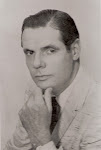


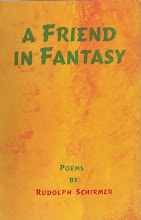

On the set of Jeopardy.


Me: (charmingly) "I'll take French euphemisms for $50..."


Host: (cagily) "Joan will stake her life on it"


Me: (still smiling) "What is Fille Mignon?"


Host: Nicely done, Liane. Did you say you were an only child?


Yes, history and I were old friends. Usually left to my own devices on Saturday mornings (like most onlys) I had seen every Hollywood historical epic from Ben Hur to "Gidget". The events of the last 5000 years were permanently (if slightly inaccurately) engraved on my psyche. If anyone could imagine a crowd of French clerics roasting a teenybopper on a bonfire, it was me.


Waldo let go of my hand, and I shuddered in the blustery chill of a French summer afternoon. Unable to stop staring at the site where the stake itself had stood, I forced myself to think about something else. Fortunately, an opportunity presented itself, in the form of a fragrant French market. I advanced to peruse the legumes, when suddently I spied something very disturbing.

I turned slowly...catching a glimpse of pale flesh out of the corner of my eye. In the words of the inimitable (except by me) Carol Channing, I intoned, "Something is not right...". Sure enough, behind a glass cabinet, I spied rows and rows of ...gasp!...tender young rabbits... hung like chickens...their hind legs poised as if to ready to leap from the pickle they'd found themelves in. Rabbits! Ohmygod! The gaul! The Frogs eat rabbits! As if Girl BBQ wasn't enough! What next?

I knew what was next, and the thought filled me with terror. I hugged Bunny ever tighter, covering her eyes lest she glimpse such a gruesome fate. After all, nothing in her short life had prepared her for this. From the lofty shelves at F.A.O. Schwartz to frolicking at the Polo Lounge, Bunny had led a charmed life. Until now, that is.

I clutched her to my breast, and ran to the one person who could, if pressed, fight off the entire French Foreign Legion - my governess, Miss Doucette. Blurting out my shocking discovery, she grabbed Bunny and in a trice, stuffed her into the back seat of the ridiculously large Cadillac that we had brought with us to motor through the narrow winding streets of Europe. Just in time, as by now I had spliced the two storylines together and heard cries of "Heretique! Heretique!" as the rabid, rabbit-hungry crowd fanned the flames of inquisition. Fortunately, my father was soon pining for Napoleon, and sped us out of this dangerous ville.

Needless to say, my appetite went on a 24 hour hiatus. For the remainder of France, Bunny kept a low profile, and spent most of her days locked in our suite, listening to jazz and wearing a Jayne Mansfield scarf and sunglasses. "Just wait til we get to a nice Protestant country...you'll be safe there," I whispered. But Bunny never made it. She was swept off a seaside sidewalk in the South of France, in a James Mason moment, hurtling down, down, down, over the cliffs, onto the rocky surf below. "Easy come. Easy go," he slurred. "A fitting end for a hare on the lam."

That night, a tear fell down upon my pillow. My only friend was gone.